

Is seasickness worse on a catamaran than on other types of boats? It’s a question we often hear from guests planning their first sailing holiday. If you’ve experienced motion sickness before, or you’re worried about feeling unwell on the water, understanding how different boats move can help you prepare. The good news is that catamarans are generally known for their stability which makes them a popular option for travellers who want a smoother experience at sea. This guide breaks down the causes of seasickness, how boat design impacts comfort, and what you can do to feel confident on your next charter.
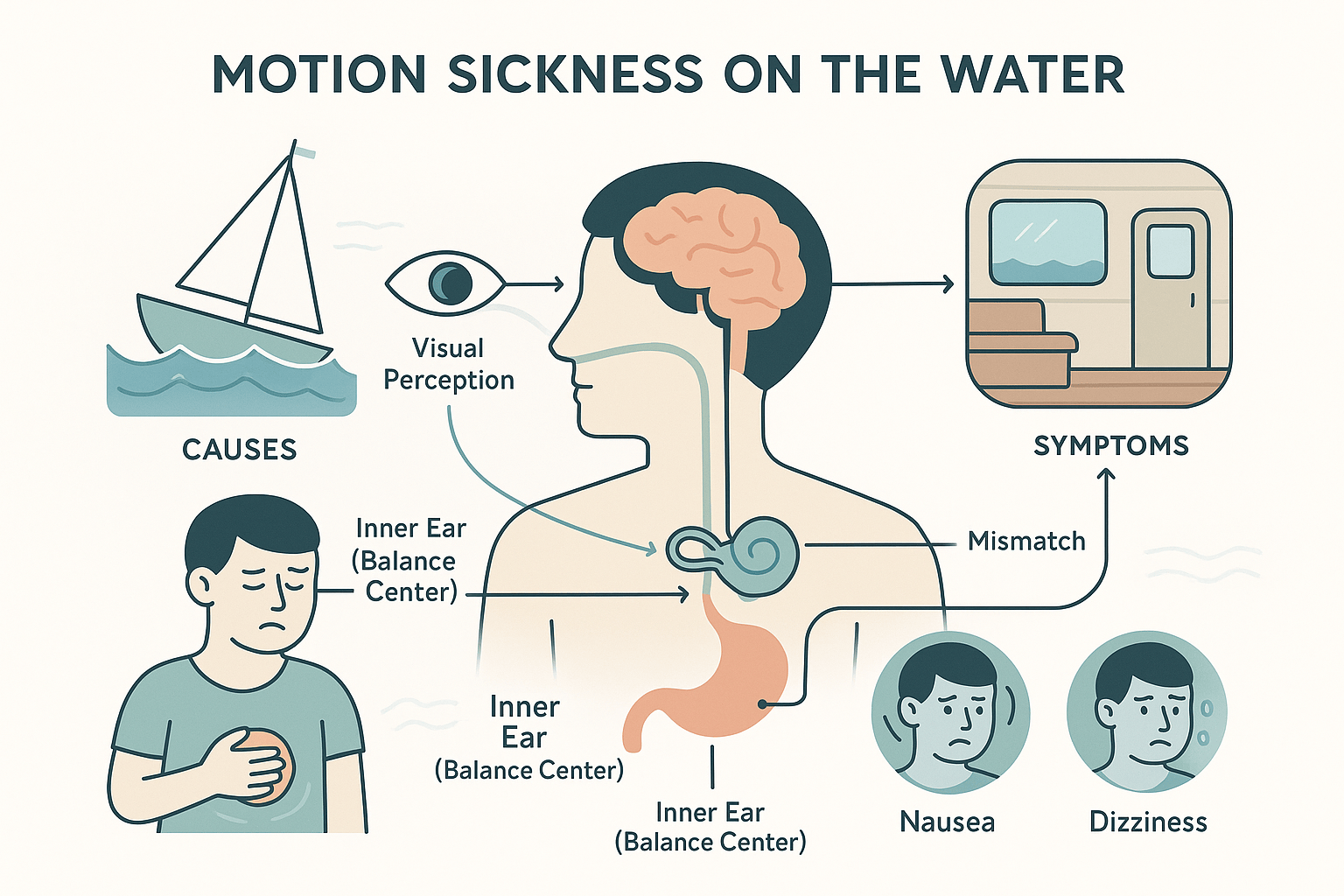
What Causes Seasickness or Motion Sickness?
Seasickness, sometimes called motion sickness or sea sickness, happens when your brain receives conflicting messages from your eyes and inner ears. You might be sitting in a cabin that looks still, but your body still feels the movement of the boat. This mismatch can trigger symptoms like nausea, dizziness, and sweating.
Some people feel seasick after just a short time on the water, while others can sail for days without issue. Factors such as wave height, wind, and even your position on the boat can affect how you feel. It’s also common to feel fine on one trip and unwell on another, depending on conditions.
Catamaran vs Monohull: What’s the Difference?
The type of boat you choose plays a big part in your experience. Traditional monohulls feature a single hull and tend to rock from side to side as they cut through waves. This rolling motion is one of the main triggers for seasickness, particularly for guests who are more sensitive to movement.
Catamarans, on the other hand, have two hulls and a wide, stable base. This design helps reduce the rolling and pitching that causes people to feel seasick. The wider stance and shallow draft mean catamarans often glide over the water rather than cutting through it sharply. As a result, guests tend to feel less movement, especially helpful if you’re concerned about getting seasick.
Do You Still Feel Seasick on a Catamaran?
While catamarans are known for offering a more comfortable ride, no boat is completely immune to movement. It’s possible to feel seasick on a catamaran, particularly in rough seas or if you’re very sensitive to motion. That said, most guests and crew report that seasickness is less frequent and less intense on catamarans than on other types of boats.
Cabins on a catamaran are usually positioned above the waterline, so you won’t feel the motion as strongly as you might in a lower cabin on a monohull. The design also allows for open, well-ventilated spaces, which is great for getting fresh air, which can ease discomfort.
Common Myths About Seasickness
There are plenty of myths floating around about sea sickness. One of the most common is that everyone gets sick on their first sailing trip. In truth, many guests never feel sick at all, especially when sailing on a stable boat like a catamaran.
Another myth is that there’s nothing you can do once you feel symptoms coming on. In reality, early action often prevents symptoms from getting worse. Moving to the deck, watching the horizon, and getting fresh air can all make a big difference.
Some also believe that catamarans don’t help at all with motion sickness, but that simply doesn’t match what most guests experience. The twin hulls provide a smoother ride, making catamarans a popular choice for those prone to feeling seasick.
Prevention Tips from Experienced Sailors
Planning ahead is one of the best ways to avoid seasickness. If you’re booking with Queensland Yacht Charters, you’ll have access to helpful advice from crew members who understand what works. Here are some of the most effective tips:
- Pick the right cabin: Choose one midship and near the waterline, where movement is less noticeable.
- Stay outside: Fresh air helps, especially if you feel the first signs of seasickness. Avoid spending too much time in enclosed spaces.
- Watch the horizon: Focusing on a stable point can help your brain process the movement more effectively.
- Eat light: Avoid heavy or greasy meals before sailing. Snack on crackers, fruit, or plain bread, and drink plenty of water.
- Use remedies: Motion sickness bands, ginger tablets, or doctor-approved medication may help if you’re especially prone to feeling sick.
- Communicate with the crew: Let them know how you’re feeling. They’re used to helping guests and can offer practical advice without making a fuss.
Why Catamarans Are a Smart Choice for Sensitive Travellers
If you’ve struggled with seasickness before, or if you’re travelling with children or older family members, a catamaran can provide added comfort. The stability makes daily activities like cooking, reading, or even just relaxing on deck more enjoyable. It also gives the crew a better working environment, reducing the chances of having a seasick crew that might impact the trip.
Families, first-time sailors, and even seasoned travellers often choose catamarans when comfort is a priority. Whether you’re planning a Whitsundays sailing holiday or heading to another destination, a stable vessel like a catamaran helps ensure that motion sickness doesn’t interfere with your plans.
Plan with Confidence
Booking a charter with Queensland Yacht Charters means you’ll have expert support to make your holiday smooth and enjoyable. Whether you’re new to sailing or just want to avoid feeling seasick, we can help you select the right vessel, plan a calm itinerary, and prepare for comfort at sea.
With the right preparation and a thoughtful boat choice, you can focus on the beauty of your destination and not the movement of the waves. Ready to start your adventure? Talk to our team today and discover the benefits of sailing aboard a catamaran with comfort, stability, and peace of mind.

Whitsundays Offseason Travel Tips
Planning a quieter trip to the islands can be a smart move if you want more space, a slower pace, and a different side of the region. These Whitsundays offseason travel tips are useful for travellers who want to avoid the busiest periods, make better use of their...

Cyclone Season Whitsundays Timing: What Travellers Need to Know Before Booking
Planning a trip to the islands means looking beyond sunny brochure photos and asking practical questions about weather, safety, and timing. Cyclone season Whitsundays timing matters because it can affect sailing conditions, travel flexibility, island access, and the...

Best Time to Visit Whitsundays for Sailing, Weather, and Island Holidays
Best Time to Visit Whitsundays for Sailing, Weather, and Island Holidays Planning the best time to visit Whitsundays starts with one simple question: what do you want most from your trip? Some travellers want calm sailing conditions and sunny days. Others want fewer...